
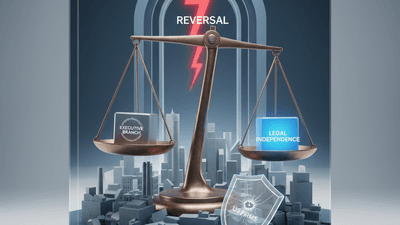



In a move that has sent shockwaves through the Washington legal establishment and beyond, the United States Department of Justice (DOJ) has abruptly reversed its stance regarding executive orders targeting law firms. On Tuesday, the Department signaled it would defend executive orders—originated during the Trump administration—that sought to penalize law firms for representing clients or causes the executive branch opposed. This decision overturns previous indications that the government would drop its appeal against rulings blocking these sanctions.
For the legal profession, this is not merely a procedural pivot; it is a fundamental challenge to the independence of the bar. It raises the specter that the federal government, regardless of who sits in the Oval Office, intends to preserve the executive capability to exert economic and reputational pressure on private counsel. As we navigate this complex landscape in 2026, the implications for General Counsel and firm leadership extend far beyond political litigation, touching on the core of how firms manage risk, compliance, and financial independence.
The Reversal: A Threat to the Adversarial System?
The core of the controversy lies in the government's assertion of power to penalize legal representatives based on their client roster. The DOJ's renewed fight suggests a strategy focused on preserving broad executive privileges rather than endorsing the specific political grievances of the past. However, the practical effect is a chilling one: law firms may face federal retribution for fulfilling their ethical duty to provide representation.
"If the government can penalize a law firm for the clients it chooses to represent, the adversarial system—which relies on the premise that every party deserves competent counsel—begins to crumble."
The Timeline of the Reversal
| Phase | DOJ Stance | Implication for Law Firms |
|---|---|---|
| Initial Ruling | Courts blocked the sanctions/orders. | Firms felt protected by the judiciary against executive overreach. |
| Interim Period | DOJ signaled intent to drop appeals. | The threat appeared to be dissipating; a return to normalcy. |
| Current Status | Abrupt Reversal: DOJ will defend the orders. | Renewed uncertainty; firms must treat government retribution as a live risk. |
The Broader Compliance Minefield: It’s Not Just Politics
While the headline news focuses on political retribution, the Department of Justice is simultaneously tightening the screws on corporate compliance in other areas, creating a multi-front war for legal risk managers. The DOJ’s scrutiny is not limited to who you represent, but how your firm and your clients operate, particularly regarding technology.
The AI Compliance Mandate
As firms grapple with the political implications of the DOJ's reversal, they must also heed the Department's evolving expectations for Artificial Intelligence. Recent guidance highlights that the DOJ now expects robust AI risk management frameworks. The days of "move fast and break things" are over for legal tech; ethical implementation is now a compliance requirement.
- Algorithm Transparency: Firms must understand the data powering their tools.
- Bias Mitigation: Proactive testing for discriminatory outcomes in AI-driven legal work is essential.
- Regulatory Alignment: Corporate compliance programs must explicitly address AI risks to meet DOJ standards.
To meet these demands, the industry is seeing rapid consolidation and technological advancement. For instance, HaystackID's acquisition of eDiscovery AI underscores the sector's move toward advanced Generative AI to handle complex data workflows. This is no longer just about efficiency; it is about having the technological sophistication to respond to aggressive government investigations and discovery demands accurately and swiftly.
Operational Resilience: Financial and Structural Independence
In an environment where the government may penalize firms financially for their client choices, economic independence becomes a form of defense. Firms are increasingly looking to modernize their financial infrastructure to ensure liquidity and stability regardless of external pressures.
This trend is evident in the investment landscape. Confido Legal's recent $9 million raise to expand embedded payments represents a shift toward more resilient financial operations. By streamlining disbursements and payments, firms reduce the friction of cash flow, allowing them to weather storms—whether they be market-driven or politically motivated.
The Talent Pipeline Crisis
The pressure on the legal industry isn't just from the top down; it is also bubbling up from the entry-level. The financial model of legal education is shifting, which impacts the talent pipeline firms rely on. With federal borrowing caps looming, top law schools are now offering their own student loans. This fragmentation of financial support suggests a future where young associates may face different financial pressures, potentially influencing the types of firms they join and the risks they are willing to take.
Strategic Imperatives for Counsel
The DOJ's reversal is a wake-up call. It serves as a reminder that the legal profession operates at the pleasure of the law, but sometimes in conflict with the state. To navigate this new era, firm leaders should consider the following steps:
- Revisit Client Intake Protocols: Do not reject controversial clients, but ensure that the firm is prepared for the scrutiny that comes with them. The "tax" for representing unpopular clients may now include federal administrative friction.
- Fortify Compliance Data: With the DOJ focusing on AI and data, ensure your eDiscovery and compliance tech (like those offered by HaystackID) are audit-ready.
- Diversify Revenue Streams: Financial fragility makes firms vulnerable to political bullying. Modernize payment systems to ensure robust cash flow.
As we watch the DOJ defend these executive orders, the lesson is clear: The separation between law and politics is thinner than we hoped. For US law firms, the best defense is a combination of unshakeable ethical standards, robust compliance technology, and financial fortitude.