
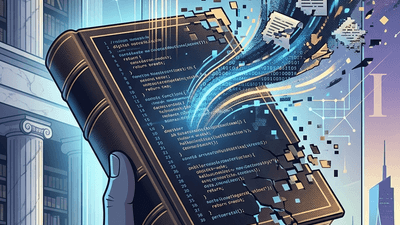



For the past three years, a comforting narrative has circulated within the upper echelons of the US legal market: AI hallucinations are a problem for under-resourced solo practitioners, unrepresented litigants, and careless mid-market firms. That illusion shattered spectacularly this week. When elite Wall Street powerhouse Sullivan & Cromwell apologized to a federal judge for submitting a court filing riddled with AI-generated errors and fabricated case law, it sent a shockwave from New York to Silicon Valley. The message is now undeniable: no firm, regardless of its pedigree, hourly rates, or historic prestige, is immune to the pitfalls of generative AI.
The Collapse of the "Pro Se" AI Myth
When generative AI first burst onto the legal scene, early cautionary tales often involved lawyers who fundamentally misunderstood the technology, treating large language models (LLMs) like advanced search engines. But the Sullivan & Cromwell incident, as detailed by multiple industry watchdogs, represents a different tier of systemic failure. A prominent New York firm facing scrutiny after opposing counsel discovered fabricated case law in a recent motion highlights a critical breakdown in standard quality control protocols.
How does a firm with virtually unlimited resources, an army of top-tier associates, and sophisticated technology stacks fall victim to the same AI hallucinations that plagued careless practitioners in 2023? The answer lies not in the technology itself, but in the intersection of law firm culture, client demands, and the evolving nature of legal work.
"The assumption that brand prestige automatically translates to technological competence has been disproven. We are entering an era where a firm's AI governance policies will be scrutinized just as closely as its win-loss record."
The Root Cause: Time Famine and the Associate Pressure Cooker
To understand the anatomy of a Big Law AI failure, one must look at the environment in which these tools are deployed. Generative AI promises unprecedented efficiency, but in a billable-hour model, that efficiency is often immediately consumed by increased volume and tighter deadlines. When associates are pushed to their limits, the temptation to rely blindly on an AI-generated draft without rigorous, line-by-line citation checking becomes a profound operational risk.
This dynamic directly impacts the relationship between law firms and their corporate clients. A recent analysis exploring how corporate in-house legal teams can foster better relationships with external law firms highlights a crucial paradigm shift: prioritizing trust and mental well-being over fear-based management yields better legal work. Fear-driven cultures—where missing an impossible deadline is viewed as a career-ending failure—are the exact environments where AI shortcuts thrive. If in-house counsel demand lightning-fast turnarounds while simultaneously squeezing external budgets, they inadvertently incentivize the very reckless AI usage that leads to public sanctions.
The Human Firewall: Why Top-Tier Talent Remains Essential
Paradoxically, the rise of legal AI has not diminished the need for elite human capital; it has amplified it. Despite predictions that AI would decimate the entry-level legal job market, recent employment data for the class of 2025 shows that law school graduates continue to secure top-tier legal positions at a remarkably high rate.
This enduring demand reflects a fundamental shift in the junior associate's role. They are no longer just drafters; they are the firm's primary fact-checkers, AI auditors, and strategic reviewers. The Sullivan & Cromwell incident proves that human oversight cannot be outsourced to a secondary algorithm. Firms are hiring aggressively because they need brilliant legal minds to verify, contextualize, and challenge the outputs of their AI systems.
Redefining the Junior Associate Role
- From Drafter to Editor: Associates must be trained to approach AI-generated text with deep skepticism, treating it as a hostile witness rather than a trusted colleague.
- Citation Verification as a Premium Skill: The ability to trace a legal principle back to an authoritative, non-hallucinated source is now a critical competency that must be explicitly taught and tested.
- Technological Fluency: Junior lawyers must understand why an LLM hallucinates—recognizing that these models are predictive text engines, not databases of factual truth.
Rebuilding Trust: A Blueprint for US Firms and In-House Counsel
The fallout from this high-profile hallucination will force a renegotiation of standard operating procedures across the Am Law 200. In-house counsel will no longer accept vague assurances of "technological competence." They will demand verifiable proof of AI governance.
To survive this transition, firms must move from reactive apologies to proactive frameworks. Here is how the landscape of legal drafting and review is shifting:
| Operational Area | The Old Paradigm (Pre-2026) | The New Paradigm (Post-S&C Incident) |
|---|---|---|
| AI Usage Policy | Vague guidelines encouraging "responsible use" of approved internal tools. | Strict, auditable workflows requiring human sign-off on every AI-generated citation. |
| Client Transparency | AI use is treated as a back-office efficiency, rarely discussed with clients. | Mandatory disclosures in engagement letters detailing exactly how and when AI is used. |
| Quality Control | Partner review focuses on high-level strategy and tone. | Multi-tiered review systems including dedicated "AI compliance" checks before filing. |
| In-House Dynamics | Transactional, deadline-driven demands fueling associate burnout. | Collaborative partnerships focusing on sustainable workflows to ensure accuracy over speed. |
The Path Forward: Accountability in the Algorithmic Age
The Sullivan & Cromwell apology is not an indictment of generative AI as a tool; it is an indictment of the legal industry's rush to deploy it without adequate structural safeguards. AI will continue to revolutionize how US law firms operate, draft, and strategize. However, the "move fast and break things" ethos of Silicon Valley is fundamentally incompatible with the solemn obligations of the judicial system.
As we look toward the remainder of 2026 and beyond, the competitive advantage will not belong to the firm with the most advanced AI platform. It will belong to the firm that builds the most resilient human-in-the-loop processes. Trust is the ultimate currency in the legal profession. As this week's headlines prove, AI can draft a motion in seconds, but it takes only one hallucination to damage a century of institutional credibility. The US legal market is officially on notice: the era of blind trust in the machine is over.