
search
Protect your practice from regulatory penalties and financial crime by mastering critical anti-money laundering frameworks tailored specifically for the legal profession.
Attorneys occupy a complicated position in the anti-money laundering (AML) framework. Legal professionals are not currently subject to the same BSA/AML program requirements as banks and other financial institutions, but that regulatory gap is narrowing. FinCEN has issued proposed rulemaking that would impose AML obligations on certain legal professionals for the first time, and the legal services sector is under increasing scrutiny from regulators and enforcement agencies, who regard law firms as a significant vulnerability in the U.S. AML system. Attorneys who handle real estate transactions, corporate formations, client fund management, or cross-border matters are already operating in areas that money launderers actively target.
The practical risks for attorneys extend well beyond regulatory exposure. Knowingly assisting a client in laundering funds can constitute a federal crime under 18 U.S.C. § 1956, and even unwitting facilitation can lead to professional discipline, civil liability, and reputational damage that is difficult to recover from. The challenge for most legal professionals is not indifference to these risks, but rather the absence of a structured framework for identifying suspicious activity, conducting meaningful client due diligence, and understanding where attorney-client privilege does—and does not—protect them from disclosure obligations.
This session examines both the AML obligations that currently apply to legal professionals and those likely to apply in the near future, with a focus on the practice areas and transaction types that carry the highest risk. Topics include the BSA framework and its application to non-bank financial institutions and designated non-financial businesses and professions; FinCEN’s proposed rulemaking on legal professionals; client due diligence practices that reduce risk without compromising professional relationships; how to recognise common money laundering red flags in legal practice; and the intersection of AML obligations with attorney-client privilege and professional ethics rules.
Participants will leave with a practical understanding of where their current practice creates AML exposure, the client due diligence and intake procedures that can reduce that exposure, and a working knowledge of the regulatory developments most likely to affect legal professionals in the near term.

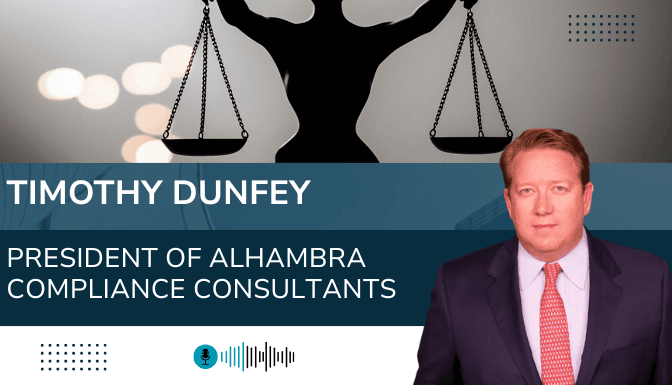
President | Alhambra Compliance Consultants
Timothy Dunfey began is banking career as a teller with First Union Bank of Florida then expanded his industry and product knowledge with positions as a Registered Investment Advisor with Morgan Stanley. After graduating from law school he accepted the position of Deputy BSA Officer at Great Florida Bank. He was a Senior Consultant with Promontory Financial Group, Legal and Compliance Officer with Jasper Card and serves as General Counsel to multiple fintechs.